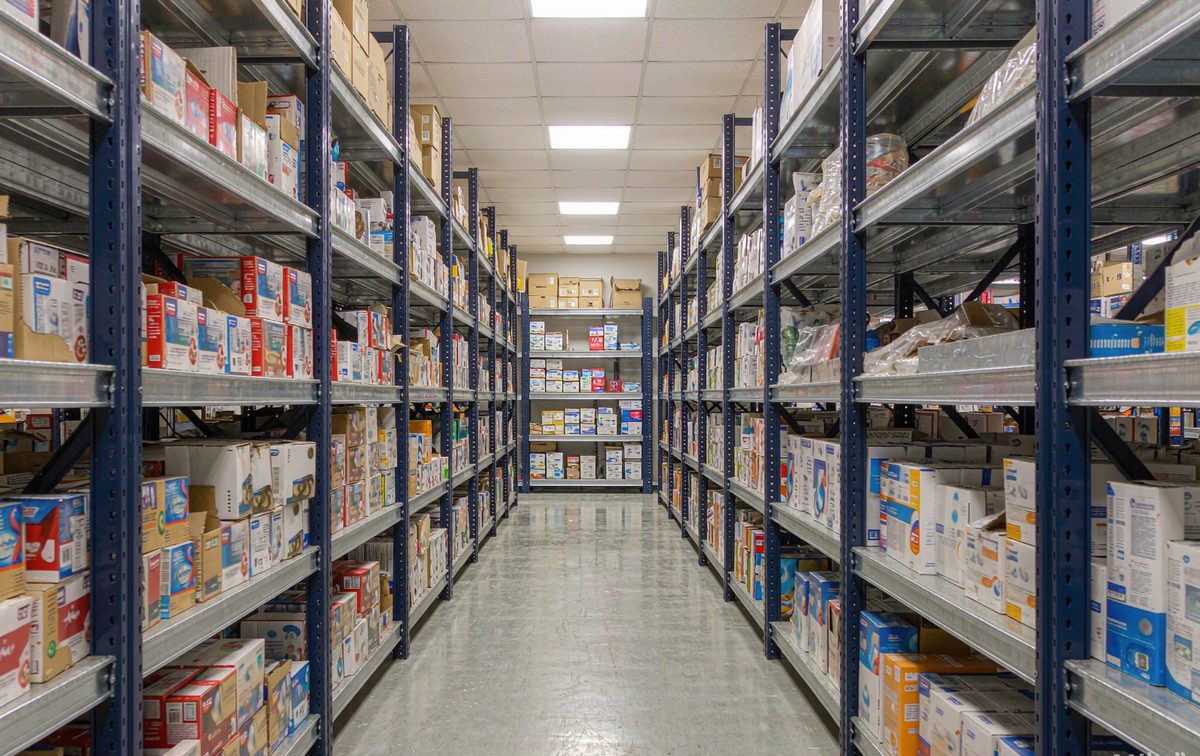
Walk into any distribution center, retail backroom, or tire shop, and you’ll see steel shelving doing the same job in a hundred different configurations. The right configuration depends less on the shelf itself and more on what you store, how heavy it is, and who touches it every day.
We manufacture steel shelving and racking in seven product families, and after years of supplying full-container orders for importers and distributors, we’ve mapped seven common storage scenarios that cover most of the enquiries we get. For each one: what matters, what to spec, and the loads you can plan around. All load ratings below are per shelf level, evenly distributed (UDL), on flat, anchored bays.
Quick selector:
| Your scenario | Best fit | Load per shelf |
|---|---|---|
| Warehouse bulk storage | Heavy Duty Shelving | up to 500 kg (1,100 lb) |
| Spare parts, oily or humid rooms | Full Steel Shelving | 500–1,000 kg (1,100–2,200 lb) |
| Retail backroom / stock room | T-Hole Shelving | 150–300 kg (330–660 lb) |
| Garage / mixed workshop storage | Slotted Angle Shelving | cut to size |
| Tire and wheel storage | Tire Rack | 500–1,000 kg (1,100–2,200 lb) per level |
| Light goods, documents, small boxes | Light Duty Shelving | light duty |
| Damp, cold or fire-regulated sites | Galvanised / Full Steel variants | 500–1,000 kg (1,100–2,200 lb) |
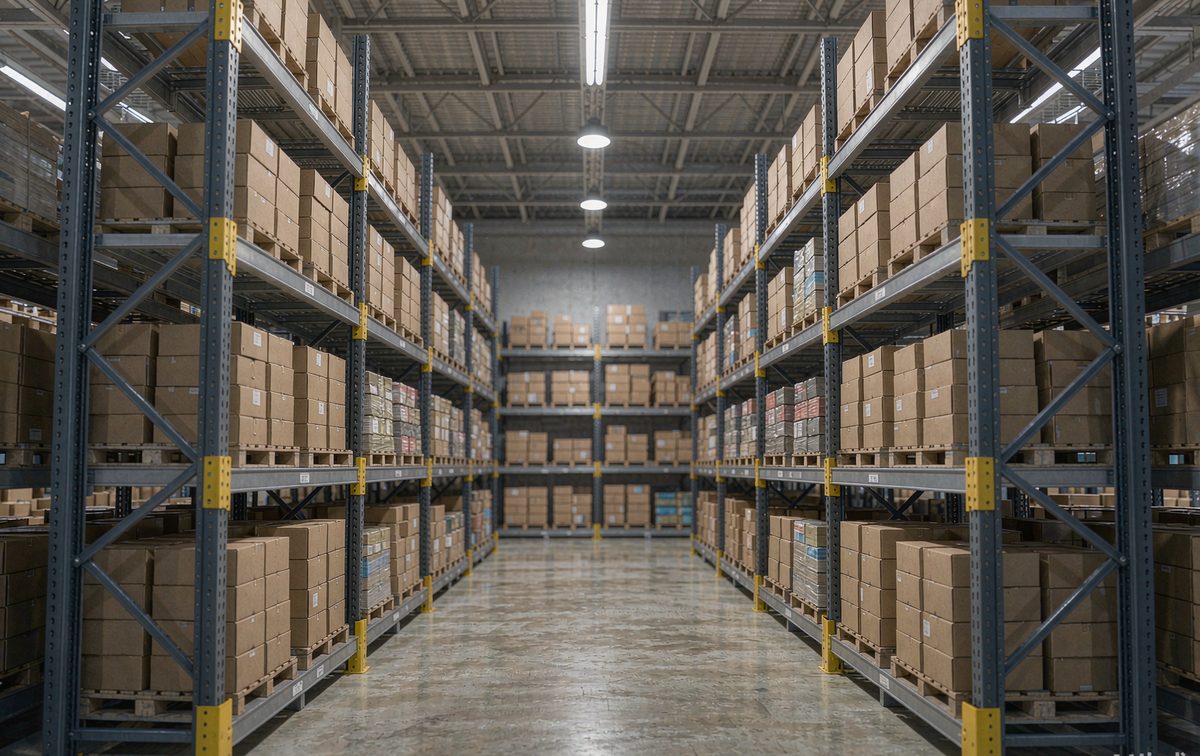
1. Warehouse bulk storage: Heavy Duty Shelving
The scenario: pallet-adjacent storage, picking lines, distribution centers where bays take a beating daily.
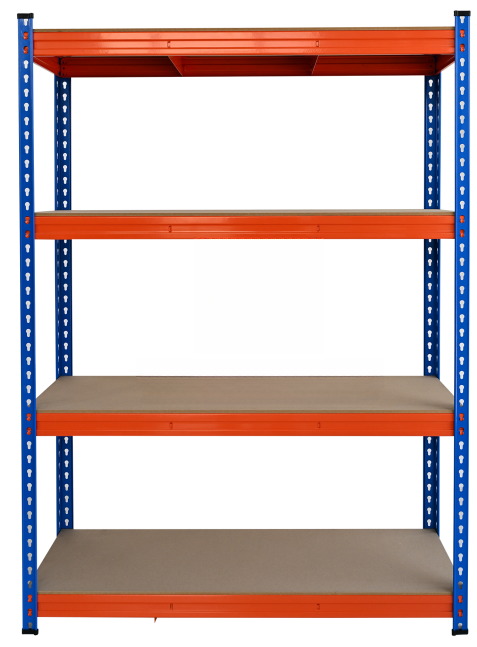
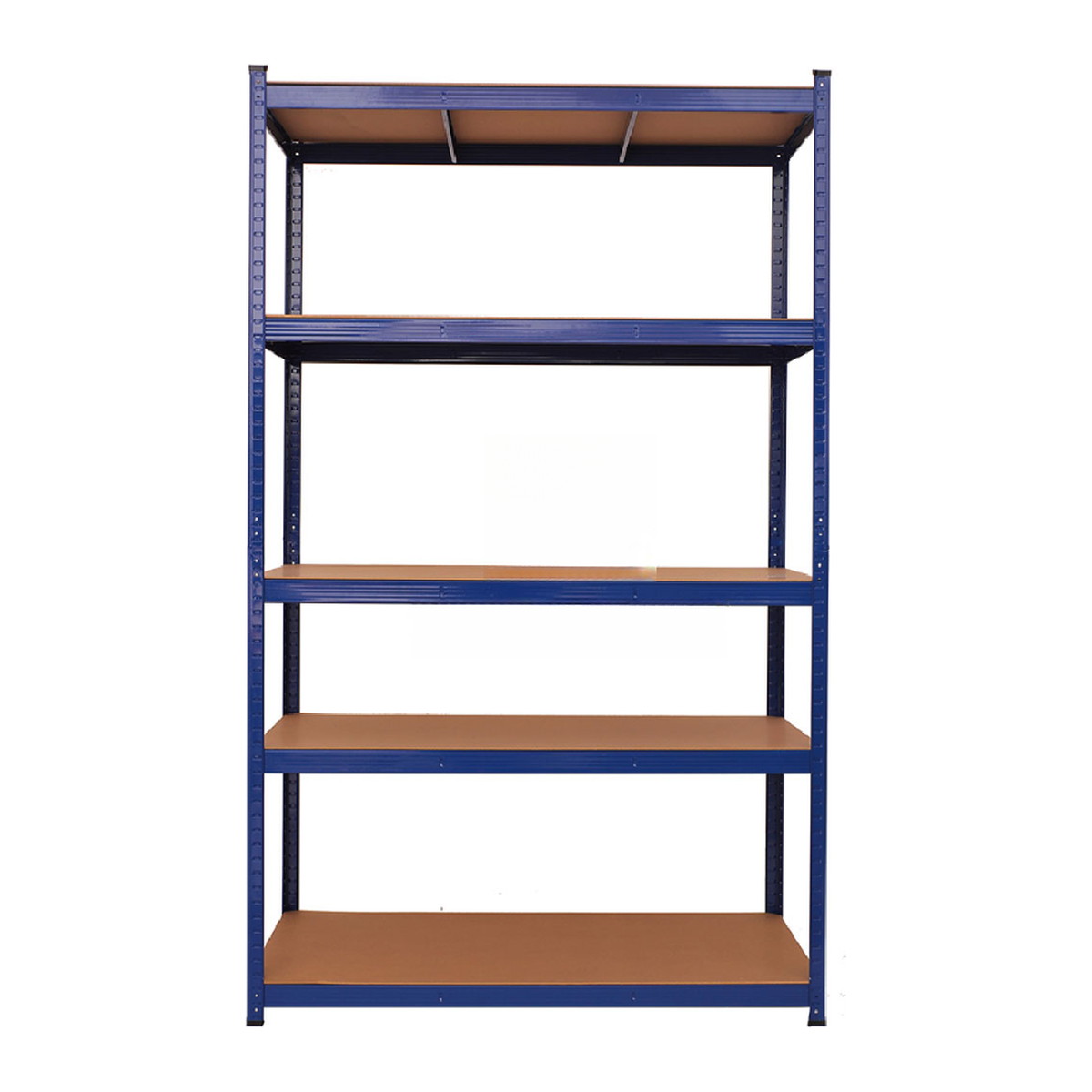
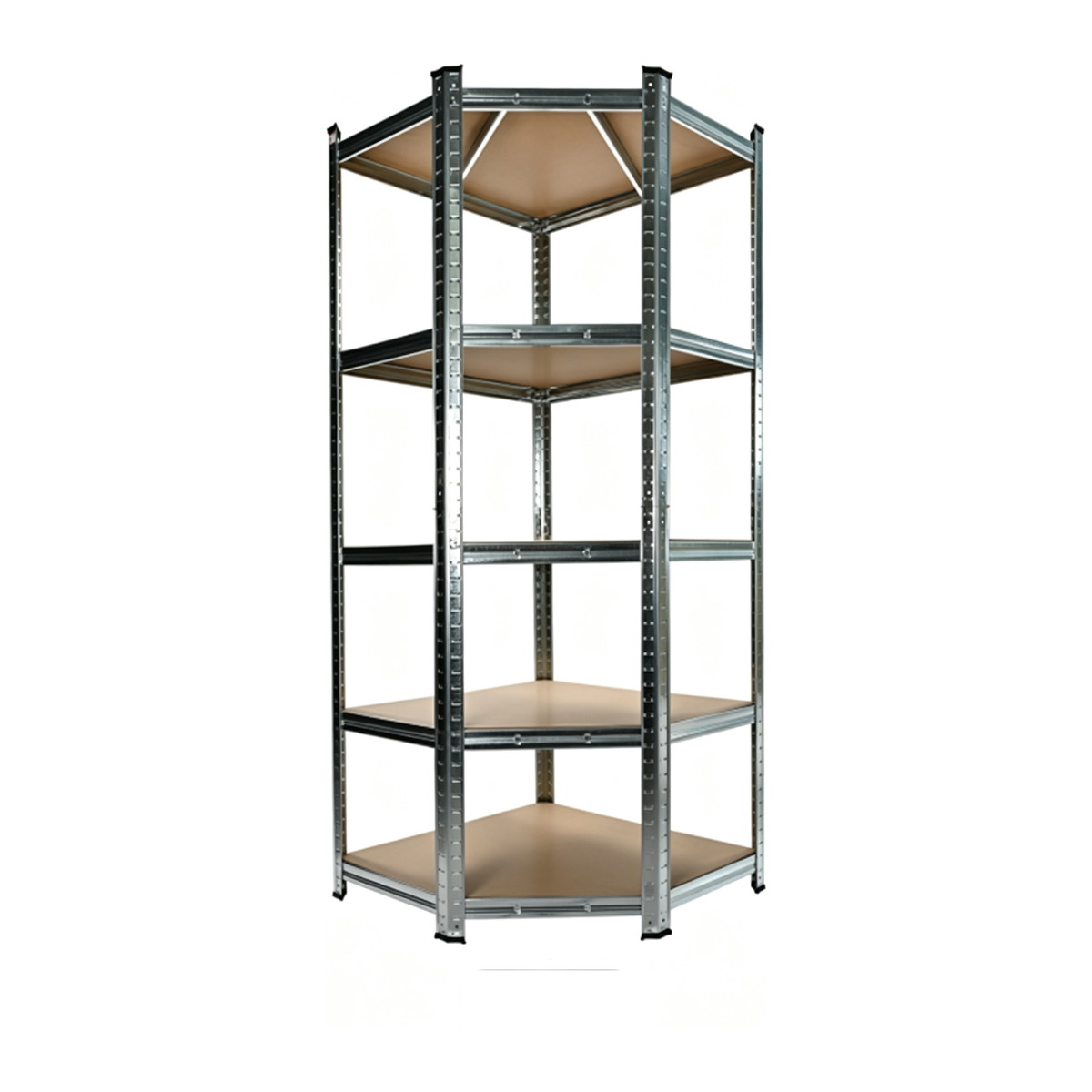
What matters: load per shelf and frame rigidity. For mixed palletized and hand-stacked goods, spec 500 kg (1,100 lb) per shelf — that’s the rating of our heavy duty range, carried by Q235 structural steel uprights with drop-in shelf panels.
The setup that works:
- Widths 1,200 / 1,600 / 2,000 mm (47 / 63 / 79 in), depth 600 mm (24 in)
- Heights 1,830–2,000 mm (72–79 in), 3–5 levels
- Steel shelf panels for industrial loads; MDF where goods are boxed and dry
- Ships knocked down flat in individual export cartons — a 20 ft container can normally take a single-product load, while 40 ft HC shipments are usually mixed with other sizes or product families to stay within the weight limit, keeping freight per bay low
Planning a full warehouse layout? The 2026 catalog lists every width, height and load rating in metric and imperial. Or send us your bay dimensions and we’ll come back with a layout quote, usually within 24 hours.
2. Spare parts and workshops: Full Steel Shelving
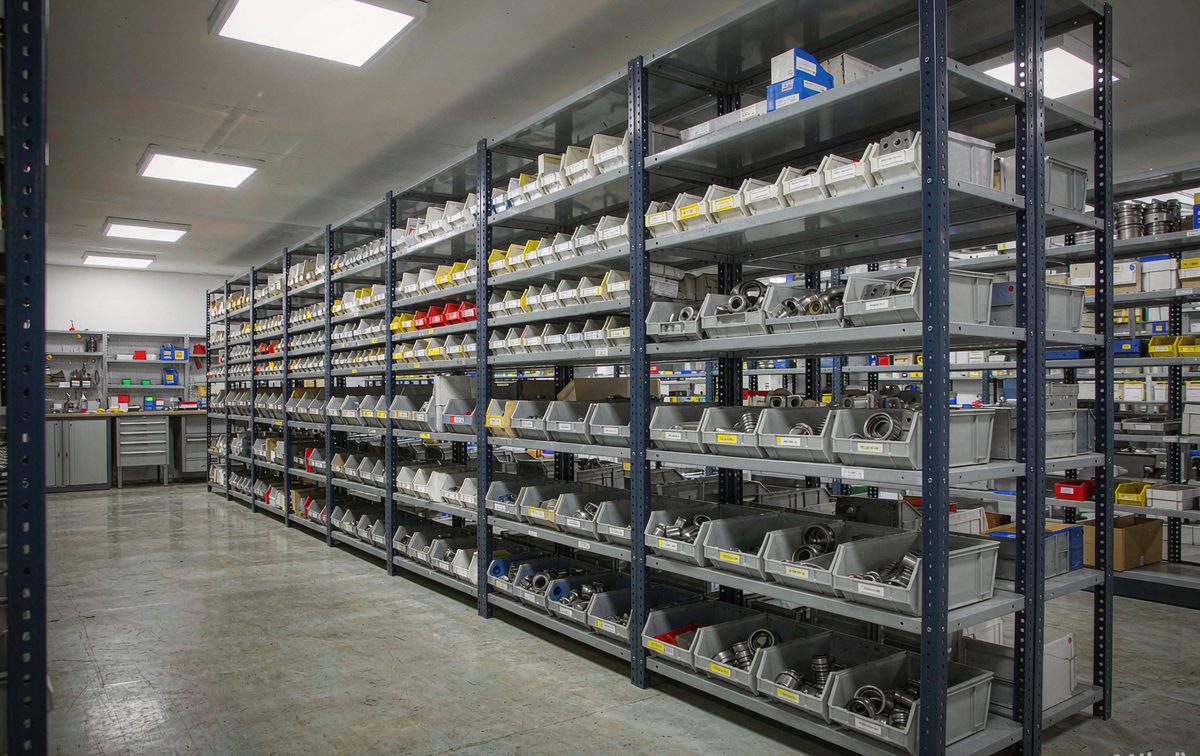
The scenario: machine spare parts, oily components, workshops where wood-based boards absorb oil and sag over time.
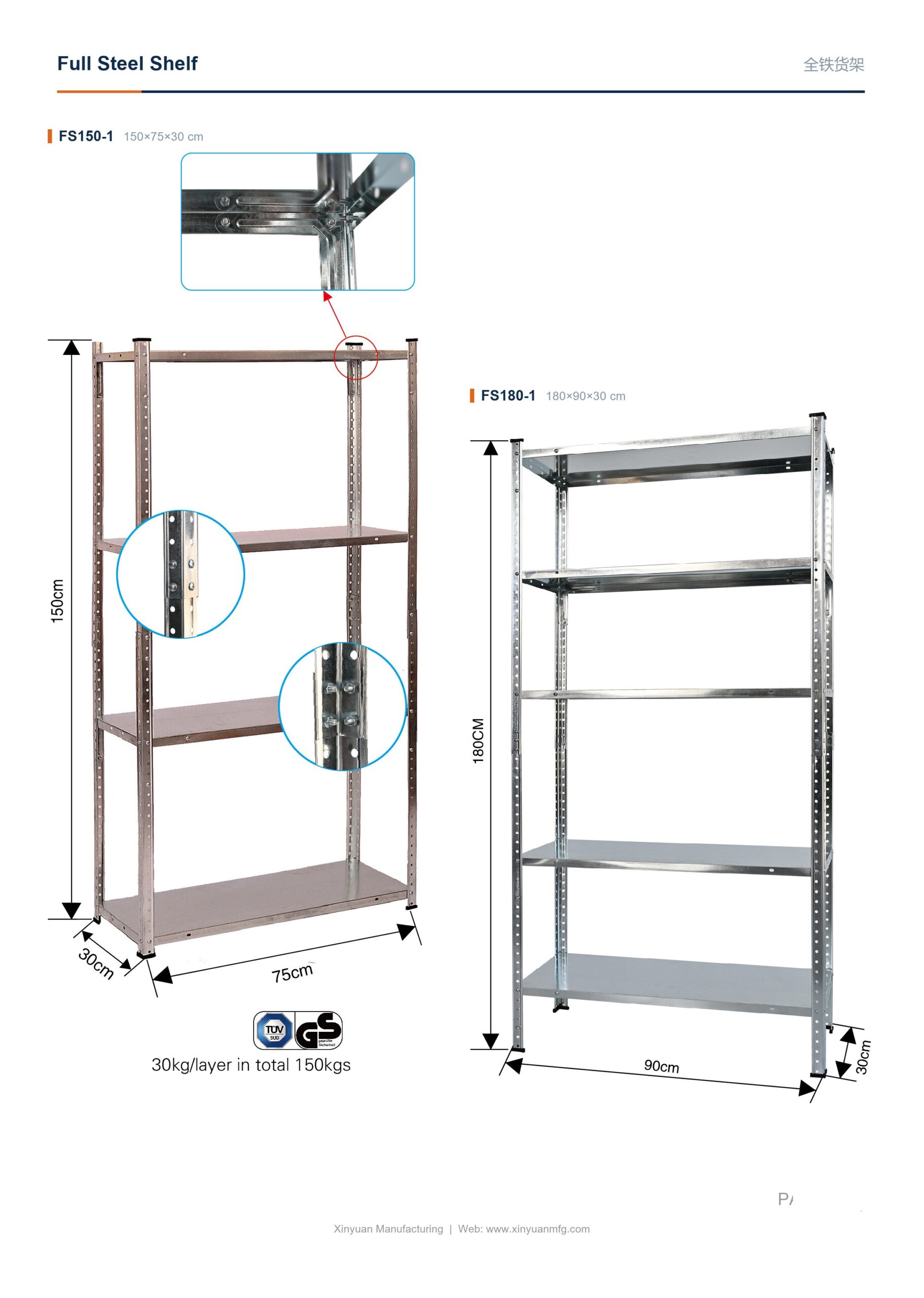
What matters: the deck material. Particle board and MDF absorb oil, water and odors. Our full steel shelving uses 0.6–1.0 mm (0.024–0.039 in) steel panels — perforated or solid — with no timber anywhere in the structure.
The setup that works:
- 500–1,000 kg (1,100–2,200 lb) per shelf
- Widths 1,000–2,000 mm (39–79 in), depths 400–800 mm (16–31 in), heights up to 2,500 mm (98 in)
- Optional dividers, bins and label holders — one bay per machine line keeps parts organized and audit-ready
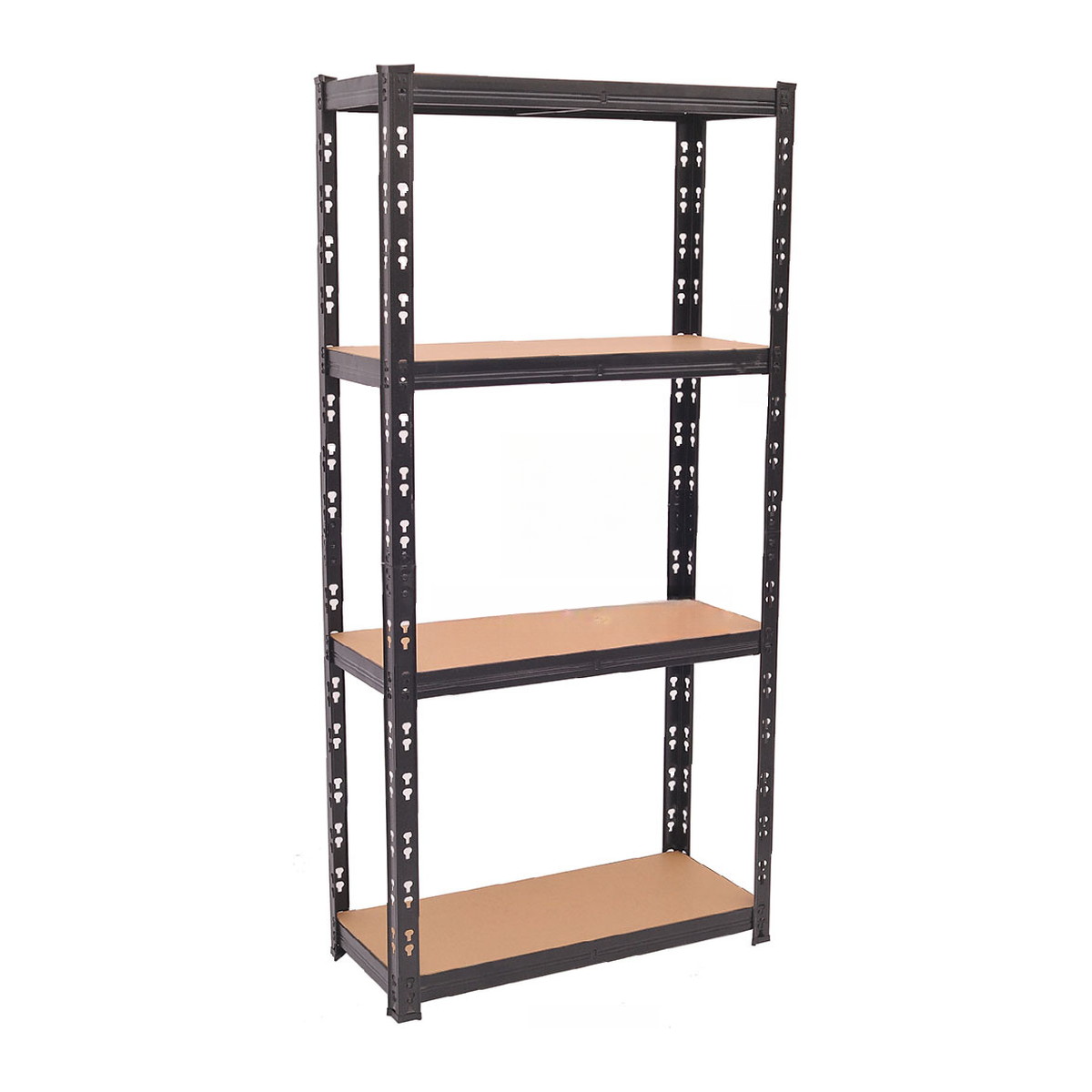
3. Retail backrooms and stock rooms: T-Hole Shelving
The scenario: supermarket backrooms, shop floors, anywhere customers or staff brush past the units daily.
What matters: a clean face and fast adjusting. T-hole (keyhole) uprights take clip-in brackets that lock under load — no protruding bolts to snag cartons or uniforms, and shelf heights re-position in keyhole steps as the stock mix changes.
The setup that works:
- 150–300 kg (330–660 lb) per shelf — cartons and replenishment totes, not pallets
- Frame heights 1,500–2,400 mm (59–94 in)
- Deck options: steel panel, particle board, MDF or wire mesh (wire mesh lets sprinkler systems and light through)
- Powder coated in any RAL colour to match store fittings
Stock room refit? Grooved shelving with clip-in supports is the close cousin here — same tool-free idea, different upright profile.
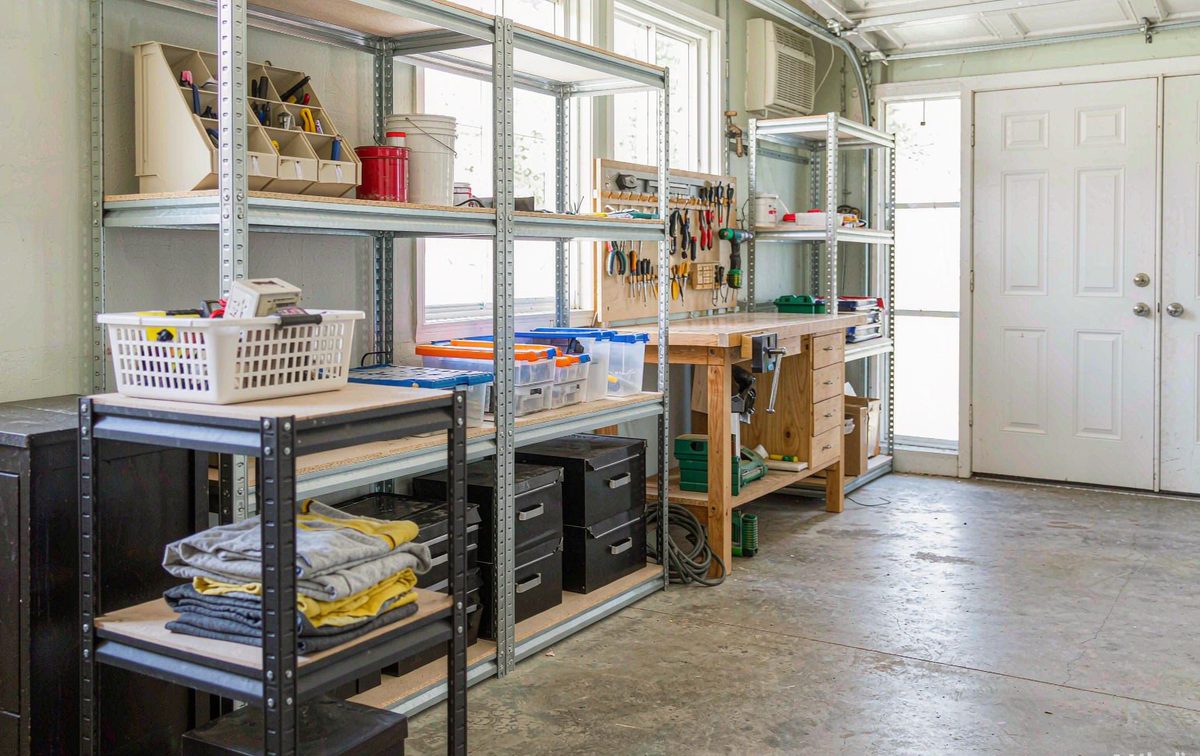
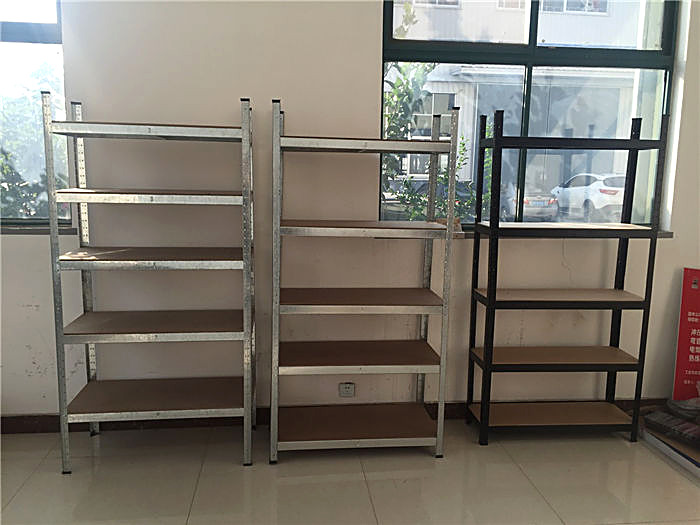
4. Garages and mixed workshops: Slotted Angle Shelving
The scenario: garages, small workshops, facility rooms where runs of shelving must fit odd corners and exact wall widths.
What matters: flexibility on dimensions. Slotted angle shelving is supplied in standard lengths and cut to your dimensions on request — the one family where non-standard widths don’t mean non-standard pricing.
The setup that works:
- Light-to-medium loads: tools, boxes, fluids, seasonal stock
- Bolt-together assembly with standard hardware
- Mix of steel and board decks in the same run
5. Tire and wheel storage: Tire Rack
The scenario: tire dealers, service centers, importers holding seasonal stock.
What matters: tyres are a shaped load. A tire rack is not a shelving bay with heavier beams — it’s shaped so tyres sit on the tread without sidewall distortion, and one person can rotate stock with a forklift instead of climbing.
The setup that works:
- 40–120 passenger tyres per bay depending on size
- Adjustable beam levels fit rims from 330–572 mm (13–22.5 in)
- 500–1,000 kg (1,100–2,200 lb) per level; bay widths 1,200–2,400 mm (47–94 in); frame heights 1,800–3,000 mm (71–118 in)
- Optional hanging bars for truck and OTR tyres
- Powder coated Q235 steel, indoor or outdoor
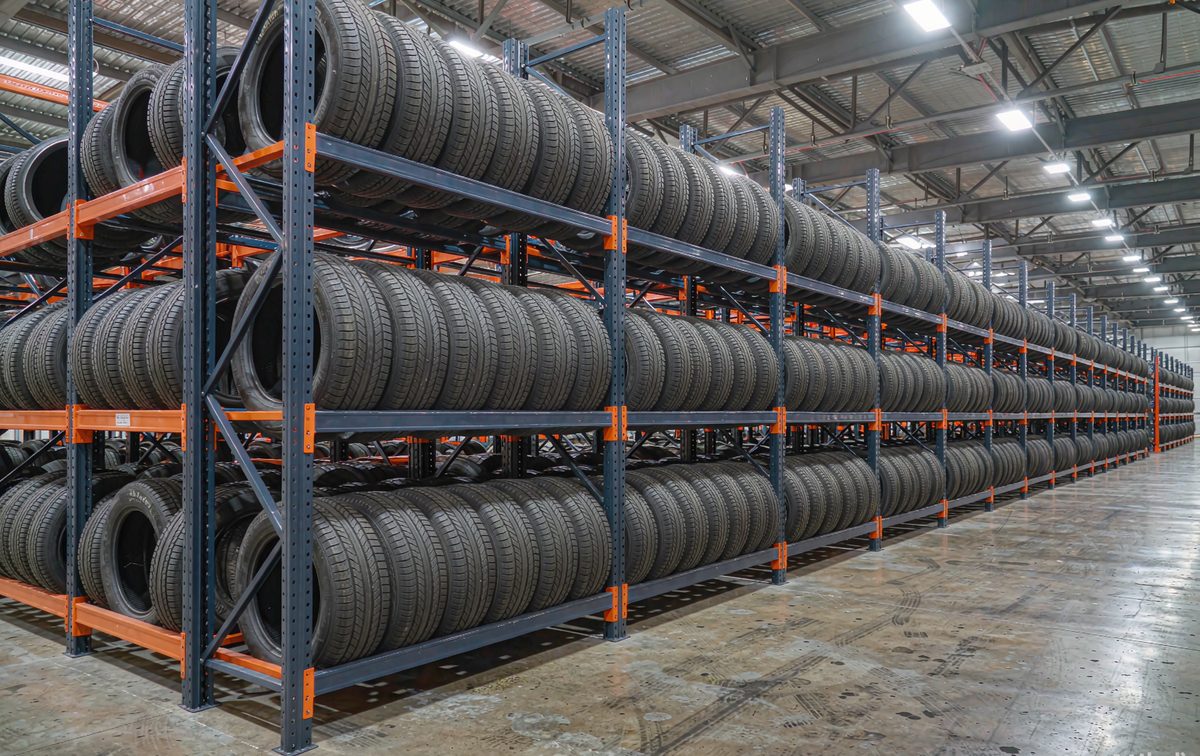
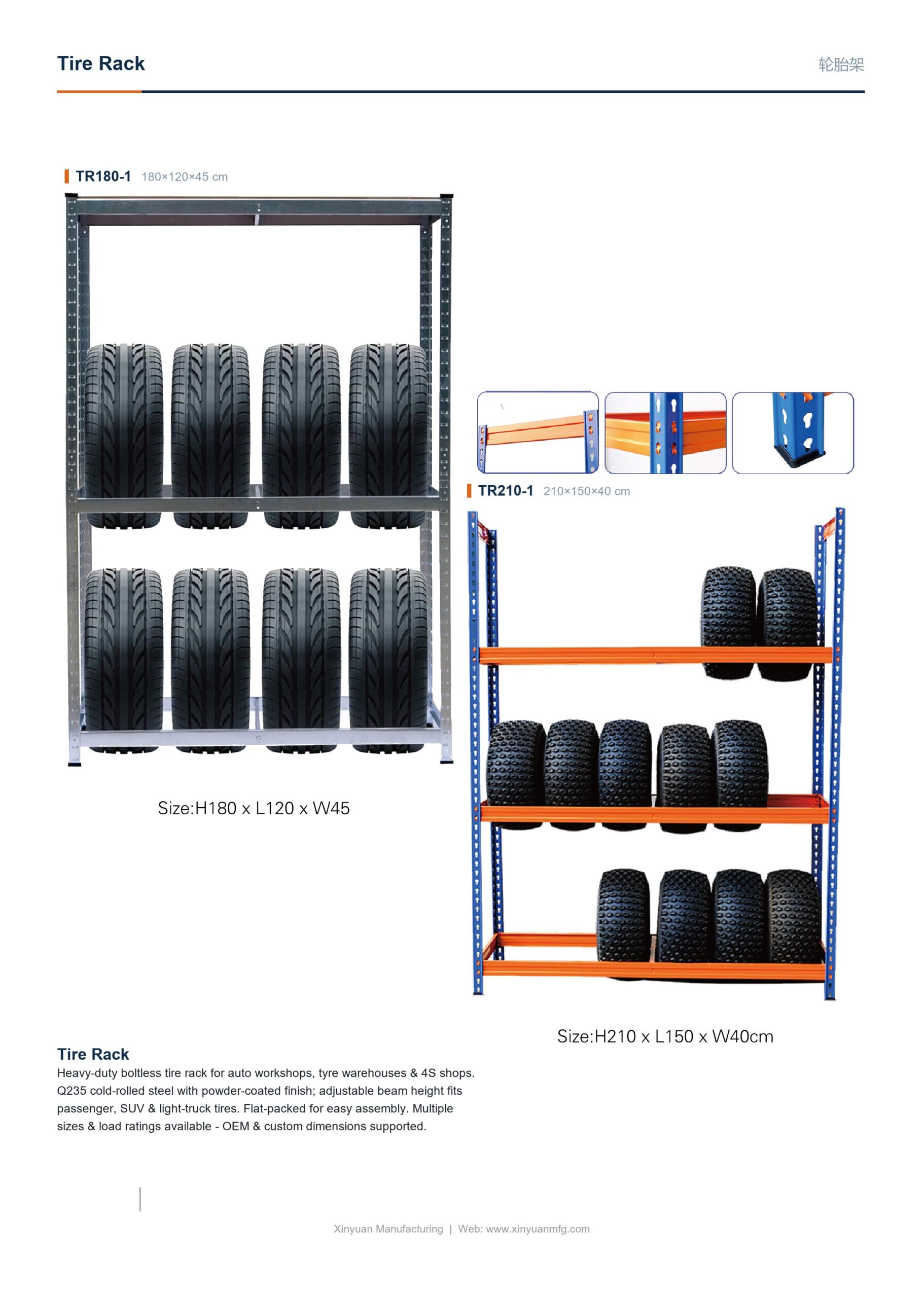
Models TR180-1 and TR210-1 are in the catalog with full drawings. For mixed tyre programs, ask for a bay-by-bay quote — MOQ is 1,000 sets per order (one set = one complete shelving bay); trial orders from 500 sets are possible on request, and sizes can be mixed.
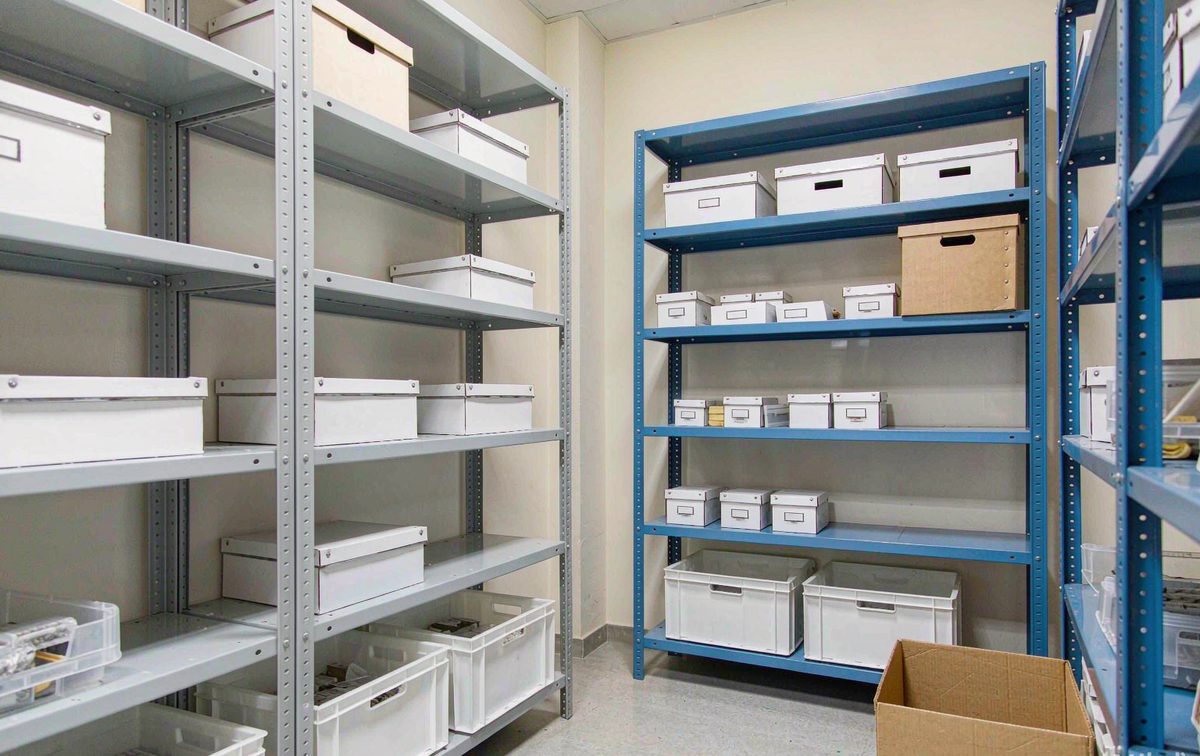
6. Light goods, documents and small boxes: Light Duty Shelving
The scenario: office archives, e-commerce pick faces, accessory storage — loads under 100 kg per shelf but dozens of bays.
What matters: cost per bay and easy-to-clean surfaces. Our light duty range with plastic shelf panels keeps small items clean and visible, and the light frame keeps freight costs down when you’re filling a whole container.
The setup that works:
- Shallow depths for aisle-constrained rooms
- Plastic decks wipe clean — food-adjacent and pharma-adjacent storage included
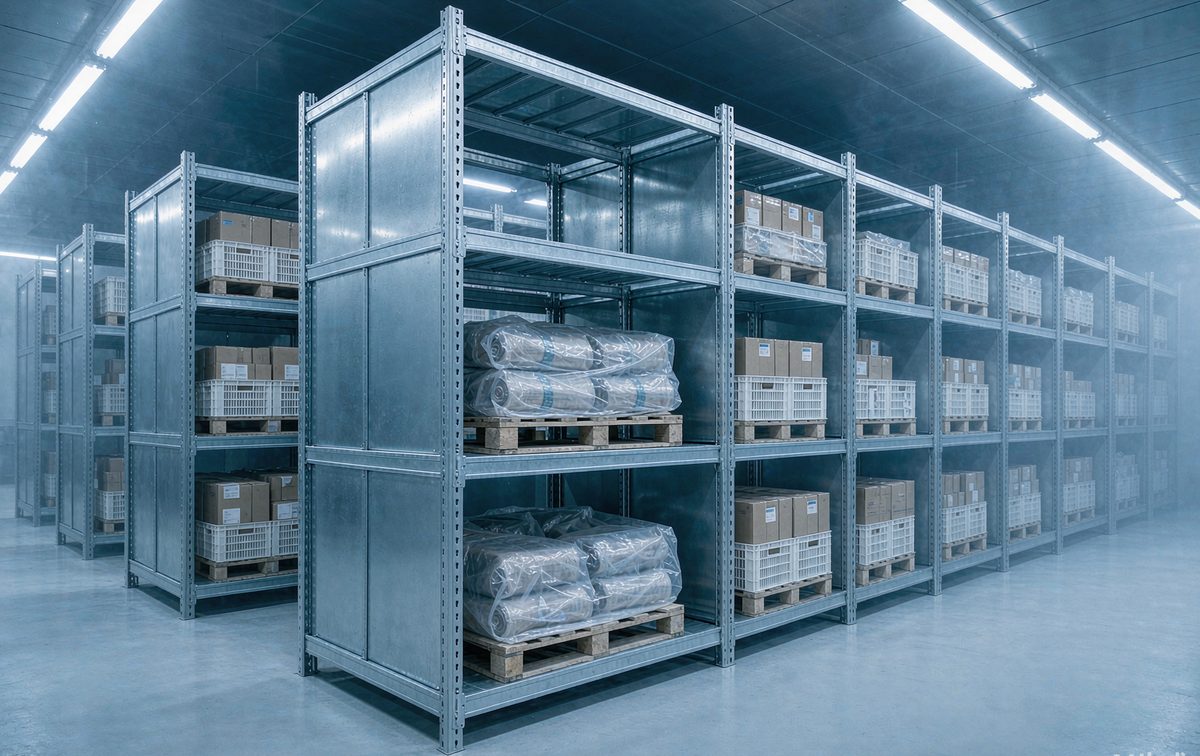
7. Damp, cold or fire-regulated sites: Galvanised and Full Steel variants
The scenario: cold rooms, coastal warehouses, wet goods, and any site where the fire marshal limits combustible shelving.
What matters: material substitution, not redesign. The same heavy duty frames come with galvanised uprights for damp or cold environments, and the full steel range removes board from the structure entirely — steel decks don’t burn, swell or absorb odors.
The setup that works:
- Galvanised uprights + steel decks for washdown and cold zones
- Perforated steel panels where sprinkler airflow matters
- Same 500–1,000 kg (1,100–2,200 lb) per shelf ratings as the indoor versions
One caveat: galvanising slows corrosion significantly, but it is not infinite protection — for coastal sites with salt-laden air or constant washdown areas, tell us the environment and we’ll spec the right finish and maintenance interval.
How to choose in 30 seconds
Answer three questions in order:
- Heaviest single shelf load? Under 150 kg → T-Hole or Light Duty. 150–500 kg → Heavy Duty. Above 500 kg → Full Steel or Tire Rack (per level).
- Environment dry and indoor? Yes → standard powder coat. Damp/cold/washdown → galvanised or full steel.
- Customers see the units? Yes → T-Hole flush face. No → prioritize load and cost.
Still between two options? Send us the bay dimensions, load per shelf and target quantity — we quote configurations, not just products, usually within 24 hours.
Frequently asked questions
What is the maximum load per shelf?
Our heavy duty and full steel ranges carry 500–1,000 kg (1,100–2,200 lb) per shelf level, tested with uniformly distributed loads on flat, properly anchored shelves. Multiply the per-shelf rating by the number of levels for total bay capacity.
What are the standard sizes?
Most families run 1,200 / 1,600 / 2,000 mm (47 / 63 / 79 in) wide, 600 mm (24 in) deep, 1,830–2,500 mm (72–98 in) tall, with 3–5 levels. Slotted angle shelving is cut to your sizes on request.
Do units require tools or bolts to assemble?
The T-hole, grooved and heavy duty ranges use slotted uprights with drop-in or clip-in panels — assembly is by hand. Slotted angle uses standard bolt-together hardware.
What is the minimum order quantity?
MOQ is 1,000 sets per order — one set means one complete shelving bay, packed in its own export carton. Sizes, colours and product families can be mixed within the order, and trial orders from 500 sets are possible on request. Everything ships knocked down flat for efficient container loading.
Can we mix different models in one container?
Yes. A 20 ft container can normally take a single-product load; 40 ft HC shipments are usually loaded as a mix of sizes or product families, because steel racking often reaches the container weight limit before it fills the cube. Tell us your target mix and we’ll plan the loading for you.
What steel grade do you use, and are you certified?
Uprights and beams are Q235 structural steel — comparable to S235JR (EN 10025) and broadly similar to ASTM A36. Production runs under an ISO-certified quality management system; mill test certificates are available on request.
Can I get custom colours?
Standard powder coat colours (blue, orange, black, grey) are in stock; any RAL colour is available on request.
Get a layout quote for your scenario
Tell us what you store, how heavy it is and how many bays you need — we’ll come back with a configuration and a quote, usually within 24 hours.
Request a Quote → Download the 2026 Catalog (PDF) →
Xinyuan Manufacturing — bolt-together steel shelving & racking, Qingdao, China. Metal shelving for importers, distributors and warehouses.